

The restaurant story this week is not about traffic spikes or flashy promos. It is about repeat behavior. New reporting shows that points-only loyalty is losing power; Chipotle just relaunched its rewards program around more frequent engagement and faster value; and Panera is pushing menu innovation designed to drive transactions without adding operational drag.
That is where the market is moving. The operators who make it easier for guests to come back, instead of just giving them a reason to visit once, will be the ones who hold up best from here.


The operators building repeat behavior will pull ahead
Loyalty is being redefined right now, and the old version is getting weaker. Restaurant Dive reported on April 8 that, according to Paytronix’s 2026 Loyalty Report, points-only programs are “largely obsolete” as a standalone strategy. What is replacing them is more targeted and more behavioral: offers designed around specific guest actions, personalized messaging, gamified challenges, and rewards that make the next visit easier to justify. The report also found that changes in menu quality and higher prices are two of the biggest reasons guests stop returning to brands they once visited regularly. Most important for operators, Paytronix identified the fourth visit as the threshold at which habit formation begins, with a 95% return rate thereafter.
Chipotle’s move today makes that shift even clearer. The chain relaunched its rewards program as “Rewards on Repeat,” with 21 million active members already driving a significant portion of sales, and new features built around faster reinforcement: monthly free food drops, lower redemption thresholds, gamified challenges, and a redesigned in-app experience. Chipotle also said nearly 90% of digital transactions are already linked to Rewards, while only about 20% of in-restaurant transactions are, which is why it is pushing in-store enrollment through menu panels, table tents, cups, receipts, and crew incentives. This is the real signal for independents: loyalty is no longer just a discount mechanic. It is an operating system for getting guests from first purchase to repeat behavior quickly, visibly, and on purpose.
What this tells us:
If your version of loyalty begins and ends with “collect points and get something later,” you are already behind. The better operators are designing for the second, third, and fourth visits with more urgency than the first.
Repeat business is now tied as much to menu quality and relevance as it is to price. If the food feels forgettable or the value feels generic, no rewards mechanic will save the guest relationship for long.

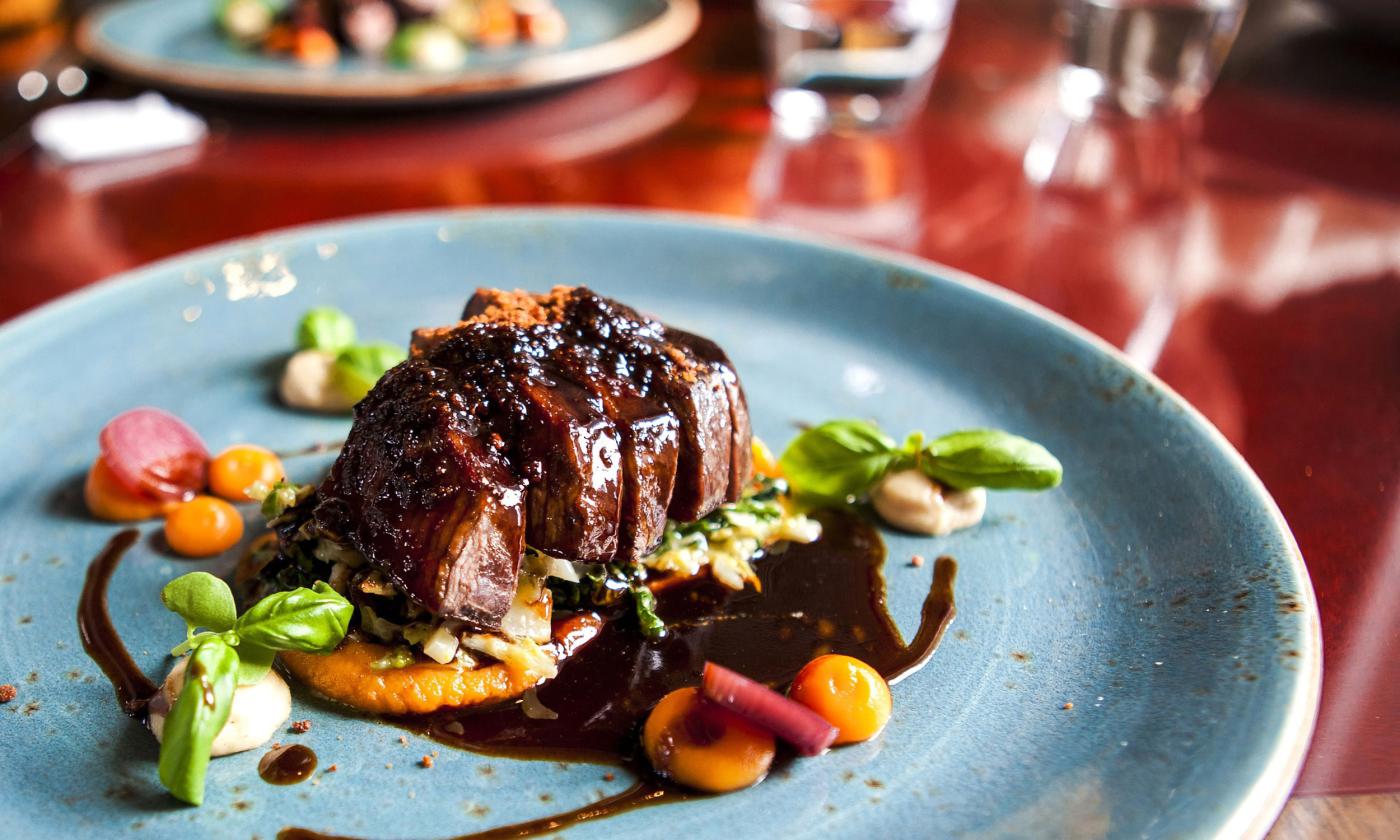
A fourth-visit plan can protect real revenue
The problem is that too many independent restaurants treat repeat business as something that either happens or does not. A guest comes in once, maybe twice, and then disappears into the market. You spent money, labor, and product to earn that first visit, but you do not have a system for turning it into a habit. That is where margin leaks. Not just in food cost or labor cost, but in the wasted cost of acquisition when the guest never becomes regular enough to matter. Paytronix’s latest report puts a sharp point on this: the fourth visit is where habit formation becomes real.
Step 1
Identify the one item or experience that has the highest chance of getting someone back within 14 days. Not your most creative item. Not your highest-ticket item. The one guests reorder, mention, or bring other people back for. That is your repeat trigger.
Step 2
Build a simple bounce-back around that trigger for first-time or infrequent guests. It can be as simple as a receipt message, a host stand card, or a server line that gives guests a reason to come back soon. The key is timing. The next visit has to feel immediate, not someday.
Step 3
Make the second and third visits easier than the first. That can mean a smoother pickup flow, a single remembered modifier, a faster reorder suggestion, or a small, direct-ordering thank-you that rewards behavior without training guests to wait for discounts.
The principle behind it is simple: frequency is worth more than broad discounting.
Why it works
Paytronix says the guest return rate reaches 95% after the fourth visit. That means the operators who deliberately accelerate those early visits are not just driving traffic. They are building the part of the customer base that is hardest to lose.

Menu innovation works best when it adds value without adding drag
Panera’s newest menu push is worth paying attention to because it solves two problems at once. According to Restaurant Dive, Panera’s new Salad Stuffers took at least 20 iterations of bread to get right, and the chain tested the product not just for guest interest but to ensure it could drive transactions without adding operational complexity. Operators said the item was easy to execute, and Panera positioned it inside a clear value barbell: Stuffers are priced from $8 to $13, and guests can upgrade any salad to a Stuffer for $1.99. Panera’s own framing is telling. It is trying to create “meaningful opportunities within the menu” while balancing quality and ease of execution.
That is why this worked. Panera did not just launch a new item to look fresh. It built a menu addition that felt distinct, was easy to explain, had a clear upgrade path, and gave guests a reason to choose something slightly more valuable without making the operation slower or messier. That is the kind of menu innovation independents should be studying right now.
Operator move this week
Find one item on your menu that guests already understand and build a higher-value version of it using ingredients and prep you already control. Do not invent a whole new category. Start with a familiar item, create one stronger upgrade path, and make sure the kitchen can execute it cleanly before Friday.
The operators who win with menu changes this year will not be the ones adding the most. They will be the ones adding the clearest thing the guest is happy to buy again.
Official Source: How Panera developed its Salad Stuffers

The restaurants that hold up this year will not be the ones chasing one more visit. They will be the ones turning visits into habits.
This week’s best operator signal is that repeat business is getting more intentional. Chipotle is redesigning its rewards to enable faster reinforcement. Panera is building menu innovation around value and ease. Paytronix is saying the quiet part out loud: if you do not get a guest to that fourth visit, you probably do not have loyalty at all. That is the standard now.
Your move this week: Pick one of your top three guest segments and map out exactly what happens between visit three and visit four. What is the gap? What is the friction? What is the offer or message that is missing? Chipotle and Panera are engineering that moment at scale, and you can start with a single cohort. The fourth visit is the threshold. Design toward it.
Until the next one,

Michael Russo has spent his career close to the restaurant business as an operator, an analyst, and now as the editor of The Restaurant Playbook. He started this newsletter because the intelligence operators actually need to rarely show up where operators actually look. Every issue is written with one question in mind: what does someone running a real restaurant need to know this week?